Showing posts with label Islamic Terrorism. Show all posts

Tuesday, May 7, 2019

Does The Bible Endorse Suicide Bombing? What Motivates Suicide Bombers?


            Suicide bombing has been a terrorism staple for years. A suicide bomber is one who sacrifices his life and kills many more for the sake of his religion or for the sake of principle.

            Can a Christian be a suicide bomber?

            If the Bible supports suicide bombing and if a Christian can be a suicide bomber, then Christians cannot condemn any act of terrorism that involves suicide bombing. Some of our Muslim friends believe that the Bible endorses suicide bombing. 

            A Christian cannot be a suicide bomber. In other words, a Christian cannot kill people.

            However, a Christian can be a martyr for his faith as the apostles were. The Bible espouses martyrdom (cf. Stephen’s martyrdom in Acts 6 & 7; Matthew 5:11, 10:39; Revelations 20:4). Therefore, a Christian can die (sacrifice his life) for the sake of his faith.

            However, some Muslims inaccurately claim that the Bible endorses suicide bombing.1 They cite Samson’s death as a case in point.

            Christian apologist and blogger, Andy Wrasman, debunks the notion that Samson was a suicide bomber in his article entitled Samson is not a Biblical parallel to Suicide Bombers! Find below an excerpt of his article – the titles of the four distinctive points:2

1st – Samson was a judge over Israel, the people of God.  The position he had was appointed by God.  Justice needed to be served.  The false god and the temple of the Philistines should not prevail against the real God of the universe.
2nd – Samson’s strength always came from God.
3rd – Samson’s death was far different from that of a suicide bomber.
4th – From the Biblical worldview, all life comes from God and it is his to give or take.  All humans die as punishment for our sin (man, woman, or child).  When and how death shall come is a matter left to God.

            Therefore, Samson’s death cannot be associated with suicide bombing.

            Saul’s death can also not be associated with suicide bombing. Saul committed suicide. Period. 

            Interpreting Saul’s death as an endorsement of suicide bombing is an exercise in Eisegesis,3 not Exegesis.4

            Since both the Old Testament (Exodus 20:13, 23:7; Proverbs 6:17) and the New Testament (Matthew 5:21-22, 15:18,19; 1 John 3:11-12) prohibit us from killing people, we could reasonably conclude that a Christian cannot be a suicide bomber.

            So the Bible prohibits the despicable act of suicide bombing. But that does not prevent a Christian from sacrificing his life for the sake of Christ, albeit without harming others.

            The Bible endorses martyrdom.

            The Bible speaks of martyrdom. The Apostles died for the sake of their belief in the Lord Jesus Christ. They died because they literally saw the risen Lord. They knew their life on earth was short and fleeting. They believed they would continue to live after their death and they would be in the presence of God forever and ever.

            The Bible teaches afterlife. Jesus gave the apostles the assurance that they will continue to live even after they die, ““I am the resurrection and the life. The one who believes in me will live, even though they die; and whoever lives by believing in me will never die.” (John 11:25-26a, NIV). They believed Jesus. Hence, they died for HIS sake.

            Therefore, Christians can sacrifice their lives for the sake of Christ, but they cannot be a suicide bomber. The Bible does not condone suicide bombing.

            What motivates suicide bombing?

            Religions motivate suicide bombing. For instance, Islam endorses suicide bombing.

            Islam also teaches afterlife and martyrdom. A Muslim believes he/she will be in paradise if they die for the sake of Allah (Sura 47: 4-6, 15). Sura 3:157,165-167,169-171&195b teaches that Allah will blot out the sins of the martyrs, and they will go to paradise.

            Atheism, as a religion or a worldview, cannot prevent suicide bombing. If atheists desire to be a suicide bomber, their worldview tacitly endorses it.

            Atheists believe that there is no afterlife. Lack of afterlife is also a motivating factor for martyrdom.

            If there is no afterlife, and if this life is all that there is to be, then what prevents a desolate or a deranged atheist to be an agent of death? Nothing!

            Afterlife is not the only motivating factor for a suicide bomber. There are other factors too. Chief among them is national humiliation.

            BBC cites a study of suicide bombers (because of suicide attacks that failed for a variety of reasons) from Tel Aviv University and reports that ‘national humiliation’ is another motivating factor, “…"national humiliation" ranked higher as a reason for an attack." This was by far the clearest, strongest motivation they expressed. “It is not a matter of personal suffering; they tried to avenge their communities suffering. They mentioned events that they saw on television, not events that happened to them personally.”5

            Therefore, the belief or unbelief in afterlife and/or national humiliation are indeed motivating factors for suicide bombing.

Endnotes:

1http://www.answering-christianity.com/suicide_bombing_in_the_bible.htm

2https://andywrasman.com/2015/01/08/samson-is-a-biblical-parallel-to-suicide-bombers/

3An interpretation, especially of Scripture, that expresses the interpreter's own ideas, bias, or the like, rather than the meaning of the text: https://www.dictionary.com.

4Critical explanation or interpretation of a text or portion of a text, especially of the Bible: https://www.dictionary.com.

5https://www.bbc.com/news/health-11770842

Websites last accessed on 7th May 2019.

Thursday, June 8, 2017

Islamic Terror & A Peaceful Response

            Recent terror attacks could motivate a supposition that Islam may be the greatest perpetrator of terror today.

Is Islam An Agent For Terror?

            Statistics do not lie. Consider a few terror statistics in the recent years: 1

            (1) As on date, 18 terror attacks by Islamic terrorists eliminated 350+ and 900+ were injured.

            (2) 1000+ dead and 2500+ injured via 47 terror attacks by Islamic terrorists in 2016.

            (3) 100+ Islamist terror attacks in the year 2015 (3000+ dead and 3000+ were injured).

            Global Terrorism Index 2016 observes that “The Islamic State in Iraq and the Levant (ISIL), Boko Haram and the Taliban were responsible for 55 per cent of all the deaths from terrorism in 2015.”2

            These statistics are adequate to conceive a case for further Islamist terror attacks this year. Significantly, Islam could be the supreme perpetrator of terror in today’s world.

            The verses from the Quran do not lie. The Quran seems to motivate terrorism. Consider a few relevant verses:3

            Quran 2: 191: “And kill them wherever you overtake them and expel them from wherever they have expelled you, and fitnah is worse than killing. And do not fight them at al-Masjid al- Haram until they fight you there. But if they fight you, then kill them. Such is the recompense of the disbelievers.”

            Quran 3: 85: “And whoever desires other than Islam as religion - never will it be accepted from him, and he, in the Hereafter, will be among the losers.”

            Quran 5:33: “Indeed, the penalty for those who wage war against Allah and His Messenger and strive upon earth [to cause] corruption is none but that they be killed or crucified or that their hands and feet be cut off from opposite sides or that they be exiled from the land. That is for them a disgrace in this world; and for them in the Hereafter is a great punishment…”

            Quran 8: 12: “…I will cast terror into the hearts of those who disbelieved, so strike [them] upon the necks and strike from them every fingertip.”

            Quran 9:5: “And when the sacred months have passed, then kill the polytheists wherever you find them and capture them and besiege them and sit in wait for them at every place of ambush…”

            Quran 47:4: “So when you meet those who disbelieve [in battle], strike [their] necks until, when you have inflicted slaughter upon them, then secure their bonds, and either [confer] favor afterwards or ransom [them] until the war lays down its burdens. That [is the command]. And if Allah had willed, He could have taken vengeance upon them [Himself], but [He ordered armed struggle] to test some of you by means of others. And those who are killed in the cause of Allah - never will He waste their deeds.”

            Muslims do not lie. The entailment of the Quranic motivation for terrorism is the logical yet dastardly response by a segment of Muslims who refuse to cooperate with the authorities even if they were aware of an imminent terror attack, “TWO thirds of British Muslims would not inform the police if they thought that somebody close to them had become involved with terrorist sympathizers, according to a poll.”4

Are We An Agent For Terror Or Peace?

            These evidences demonstrate that Islam could be construed as the greatest perpetrator of terror today. But does this offer a non-Muslim a valid reason to accuse Islam and the Muslims?

            This content would be consumed by those active in expressing their opinions in the social media or to friends and family. Despite the evidence that indicts Islam as the greatest terror manufacturer of our day, how do we respond to this predicament?

            We could either promote terrorism or peace. Our response could either placate or intensify this situation. A Christian response should rightfully help heal the menace of terrorism.

            What are the options ahead of us?

            Accusing Islam or ridiculing Muslims could be the most natural response. When we accuse Islam or ridicule our Muslim brothers and sisters, we would definitely not appease this situation. Instead, we may amplify the gap to intensify the animosity between Muslims and non-Muslims. If we are to accuse and ridicule Islam and Muslims, a Muslim could dig in his heels deep into his faith.

            Accusing Islam cannot and will not help soothe this situation. Islam cannot change; the Quran will be what it is. The Quran cannot be rewritten to make it less violent or more peaceable. Religious texts cannot be modified. This is the fact of the matter.

            Accusing our fellow Muslims cannot heal the menace of terrorism. Our accusations would probably entail a greater non-cooperation between Muslims and the governing authorities, as is the case in Britain. Alternatively, our accusations could foster an active or a passive intensification of the jihadist movement within Islam or of its support.

            Any form of accusation is more likely to promote terrorism than not.

            How then can our responses to terror heal the menace of terrorism?

            Instead of posting accusatory posts on social media that are intended to accuse Islam and its adherents, we could post prayers or comforting posts that could heal the victims of terrorism.

            Islam, by its very nature, may motivate terrorism, but that there are millions of Muslims who hate these deeds of terror. We could express our love for these Muslim brothers and sisters through our responses.

            Any well meaning government would respond in a manner befitting the situation. Crackdown on terrorism would gain intensity and stringent measures would be employed that could increase the discomfort of ordinary citizens. We could bear with these efforts instead of complaining about the increased discomfort that strives to eliminate terrorism.

            Walk alongside the governing authorities, irrespective of our political affiliations or compulsions, to help heal the terror menace. Information to the authorities of any possible terror insinuations or affiliations that may appear in our domain is the need of the hour. Pray that God gives us the wisdom and discernment to identify a potential terror situation.        

            Please do not judge every Muslim as a terrorist. Let not the average Muslim be a recipient of our latent anger and resentment against the Islamic terrorists.

            Let not our Muslim friends arrive at a conclusion (based on our accusatory posts) that we do not intend to be their good friend. Just as God loves everyone, let not our love for our Muslim friends decrease, instead let it increase.  

            Last but not the least, pray for the terrorists. Pray that they may realize their foolishness, repent and change their ways.

            Pray for the victims of terror. Pray that they regain their normal life or at the very least adapt to their situation with least resistance.

            “Blessed are the peacemakers, for they will be called children of God.” (Matthew 5: 9, NIV). “Peacemakers who sow in peace reap a harvest of righteousness.” (James 3: 18, NIV). May we be the peacemakers our world so desperately needs.

Endnotes:

1These statistics were gleaned from Wikipedia. https://en.wikipedia.org/wiki/List_of_Islamist_terrorist_attacks

2http://economicsandpeace.org/wp-content/uploads/2016/11/Global-Terrorism-Index-2016.2.pdf

3these verses were obtained from https://quran.com/


4https://www.express.co.uk/news/uk/659913/two-in-three-British-Muslims-would-NOT-give-police-terror-tip-offs

Monday, January 19, 2015

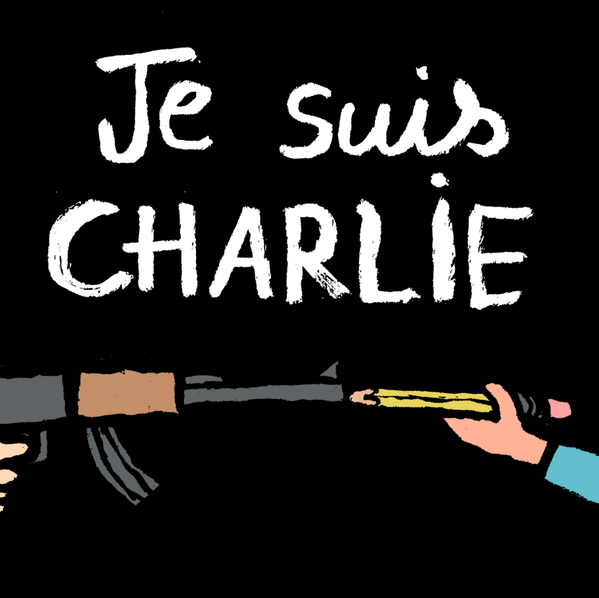
Je Suis Charlie; How Would Christians Respond & Was Charlie Hebdo Justified?


            The phrase ‘Je suis Charlie’ (I am Charlie) is used to support freedom of expression. Charlie Hebdo, the French satirical weekly magazine, angered the Islamic community when they published offensive caricatures of Prophet Muhammad. Charlie Hebdo’s action was predicated on ‘freedom of expression.’ The Islamic response, predicated on their version of ‘freedom of expression,’ was to launch a deadly assault on Charlie Hebdo, killing 12 people. 1

            Within the context of the Islamic assault against Charlie Hebdo and from the perspective of Christianity, we could ask two questions:

            1. How would have Christians responded had Charlie Hebdo employed its freedom of expression to publish offensive material against Christianity?

            2. What’s the motivating factor for the Christian response?  

Christianity Compels Love & Respect For The Unbeliever

            Christianity considers two vital theological dynamics while examining man’s tirade against God. First, Christian theology espouses God’s sovereignty and man’s freewill. A possible entailment of God-given freewill to man is man’s rejection and abuse of God. Second, God loves man even if he rejects HIM [although God’s love offers a rejecting man an eternal abode in hell].

            God loves the unbeliever. Hence, HE creates and sustains him by providing the basic necessities, and, in numerous instances, the superfluous luxuries of this life.

            Provision of basic necessities and superfluous luxuries of this life displays not only God’s love for the unbeliever, but it also reveals God’s respect for the unbeliever. God does not insult the unbeliever, for the Bible does not reveal God’s insult of the unbeliever for his unbelief. God thus respects the unbeliever during his life on earth by graciously sustaining and not insulting him.

            In fact, God out of HIS love and respect for the unbelieving man offers the unbeliever an option in eternal abode via hell. Hell is essentially the choice of the unbelieving person. The unbeliever chooses to live in hell by rejecting God during his lifetime on earth. Thus he could live outside God’s presence unto all eternity. This is the manifestation of God’s love and respect for the unbeliever, for God does not force the unbeliever to believe and love HIM.

            On one hand, God graciously sustains, and does not insult the unbeliever. On the other hand, the unbeliever, by virtue of his freewill, could reject and abuse/insult God. This is the harsh theological contrast between God and the unbeliever as revealed in the Bible.   

            Given that God loves and respects the unbelieving man, the believer is required to love and respect his unbelieving brother/sister. This love and respect should transcend unbelief and abuse. (The unbeliever’s abuse being considered in this discussion is an abuse directed against God. This abuse does not harm or kill a fellow man.) This then is the primary motivation for the Christian to love the unbeliever and be tolerant of his abuses against God and HIS Word. 

Christians Would Not Harm The Unbeliever

            Historic Christianity has always been under the radar of the unbelievers, so much so history reveals an assortment of exotic and mundane criticisms against the God of the Bible, the Lord Jesus Christ, and the Bible. In fact one can anticipate a tirade against historic Christianity around the dates of Christian holy occasions such as Christmas and Easter; the most recent being Newsweek’s assault against the Bible and the ad nauseam nonsensical allegation that Christ had married Mary Magdalene.

            The most recent denigrations of Christ and the Bible are similar to the denigration of Prophet Muhammad by Charlie Hebdo. To the best of my knowledge, Christians professing to historic Christianity did not respond violently against the sources of denigration of the Bible and the Lord Jesus.

            Hence it would be reasonable to conclude that Christians would not have responded in a violent manner against Charlie Hebdo had the satirical magazine published offensive material against historic Christianity.

            (The unbelievers’ attack in the context of this essay is not a physically violent aggression but an intellectual attack at the most. Therefore, when the attack is intellectual, the response ought to be intellectual as well. The intellectual response does not physically harm anyone.)

Was Charlie Hebdo Justified? Scope of Freedom of Expression

            Was Charlie Hebdo justified in publishing offensive caricatures of Prophet Muhammed? Did Charlie Hebdo act within the scope of freedom of expression?

            On one hand is an opinion that defends Charlie Hebdo’s freedom of expression that permits a rather limitless scope to offend anyone. Facebook’s chief executive, Mark Zuckerberg, ostensibly defended Charlie Hebdo and spoke against the terrorist attack since it was against freedom of expression, ““It wasn’t just a terrorist attack about just trying to do some damage and make people afraid and hurt people. This was specifically about people’s freedom of expression and ability to say what they want,” said Zuckerberg.” 2

            On the other hand, Pope Francis advocated for a freedom of expression within a limit, ““There is a limit,” he said, speaking in Italian. “Every religion has its dignity. I cannot mock a religion that respects human life and the human person.”” 3

            Freedom within a limit could work well within a theistic worldview. Those subscribing to a theistic framework are expected to respect life and the contradictory religious worldview of a fellow human being. For instance, the love-your-neighbor mandate of Christianity prohibits murder or abuse of a fellow human being.

            But Charlie Hebdo brands itself as a satirical anti-religious publication. 4 Hence, one should expect tirades against religious views.

            What then is the scope of freedom of expression? A cursory look at God’s relationship with an unbeliever could pave way for a conducive human response against unreasonable anti-religious diatribes that offend religious sensitivities.

            Here is a classic case in point. The bulldog of atheism, Richard Dawkins, in his work The God Delusion, considers the God of the Bible as, “arguably the most unpleasant character in all fiction: jealous and proud of it; a petty, unjust, unforgiving control-freak; a vindictive, bloodthirsty ethnic cleanser; a misogynistic, homophobic, racist, infanticidal, genocidal, filicidal, pestilential, megalomaniacal, sadomasochistic, capriciously malevolent bully.” Significantly, Dawkins attacks God. But how does God respond to Dawkins?

            Although Dawkins’ assault of God is exceptional, God graciously allows him to live and live well. Thereby God offers Dawkins a chance to repent and believe in the one true and living God.

            God allows man to abuse HIM rather endlessly. So the scope of freedom of expression seems limitless from God’s perspective but within one’s mortal existence. When God allows man to abuse HIM endlessly and mindlessly, could man introduce boundaries against religious diatribes?  

            From the perspective of respect of fellow humans and peace, I would not justify Charlie Hebdo’s attack on Islam. Having said this, we should recognize an apparently limitless freedom offered by God to an unbeliever.

            Although Pope’s idea of limited freedom of expression is wise, one cannot expect every anti-religious Tom, Dick and Harry to respect religious sensitivities. Therefore, those subscribing to a theistic framework should love and respect even those who abuse religious sensitivities.

Advocating Reasonable Response Against Attack On Religion

            When the assault against religion is in the form of a cartoon, shouldn’t the response also be on the same lines? A violent response that kills and harms lives cannot be justified under any condition.

            Thus we agree with Pope Francis that ““One cannot offend, make war, kill in the name of one’s own religion, that is, in the name of God,” Francis said. “To kill in the name of God is an aberration.”” 5

            Let us continue praying for a reasonable response – a response that does not maim or murder anyone - even when our religious sensitivities are mutilated. Amen.


Endnotes:
1 http://www.huffingtonpost.com/2015/01/14/charlie-hebdo-attack_n_6468498.html?ir=India
2 http://www.theguardian.com/technology/2015/jan/15/mark-zuckerberg-facebook-charlie-hebdo
3 http://time.com/3668875/pope-francis-charlie-hebdo/
4 http://en.wikipedia.org/wiki/Charlie_Hebdo#2015_attack

5 http://time.com/3668875/pope-francis-charlie-hebdo/